Shopping for an ocean-view condo in Broward County can feel simple at first. Then you realize Fort Lauderdale, Hollywood, and Pompano Beach each offer a very different version of beach living, price point, and building style. If you want to know where Fort Lauderdale stands, and whether its premium is worth it for your goals, this comparison will help you sort through the tradeoffs. Let’s dive in.
Fort Lauderdale Pricing in Context
If you compare citywide condo and townhouse numbers from Q1 2026, Fort Lauderdale sits at the top of this three-city group on price. The median sale price was $485,000 in Fort Lauderdale, compared with $310,000 in Hollywood and $295,000 in Pompano Beach. Average sale price followed the same pattern at $775,316 in Fort Lauderdale, $460,544 in Hollywood, and $498,196 in Pompano Beach.
These are not oceanfront-only figures, so they should not be treated as direct beachfront comps. Still, they are useful for understanding relative market position. In practical terms, Fort Lauderdale generally carries the strongest premium of the three, while Pompano Beach tends to offer the lower entry point and Hollywood lands in between on median price.
Market pace also matters when you are comparing options. Fort Lauderdale posted 80 days median time to contract, while Hollywood was at 90 days and Pompano Beach at 92 days. Inventory was also elevated across all three cities, with 11.6 months of supply in Fort Lauderdale, 15.5 months in Hollywood, and 10.1 months in Pompano Beach.
Why Fort Lauderdale Commands a Premium
Fort Lauderdale is not just a beach market. It is a marine-driven city with 165 miles of navigable waterways, 7 miles of beach frontage, and 25 miles of Intracoastal frontage. That mix creates a lifestyle that blends ocean views with boating access, marina activity, waterfront dining, and an urban coastal setting.
For buyers who care about boats, this matters in a very real way. Fort Lauderdale’s city facilities include the New River/Downtown Docking marina with 100 slips and full utilities, and Las Olas Marina is also a formal city facility. The result is a market where ocean-view living often overlaps with dockage access, marina proximity, and yachting logistics.
That marine identity helps explain why Fort Lauderdale appeals to buyers looking for more than a beach backdrop. If you want a condo that connects you to both the Atlantic and a broader boating ecosystem, Fort Lauderdale usually offers the most complete package in this comparison.
Fort Lauderdale Building Style and Inventory
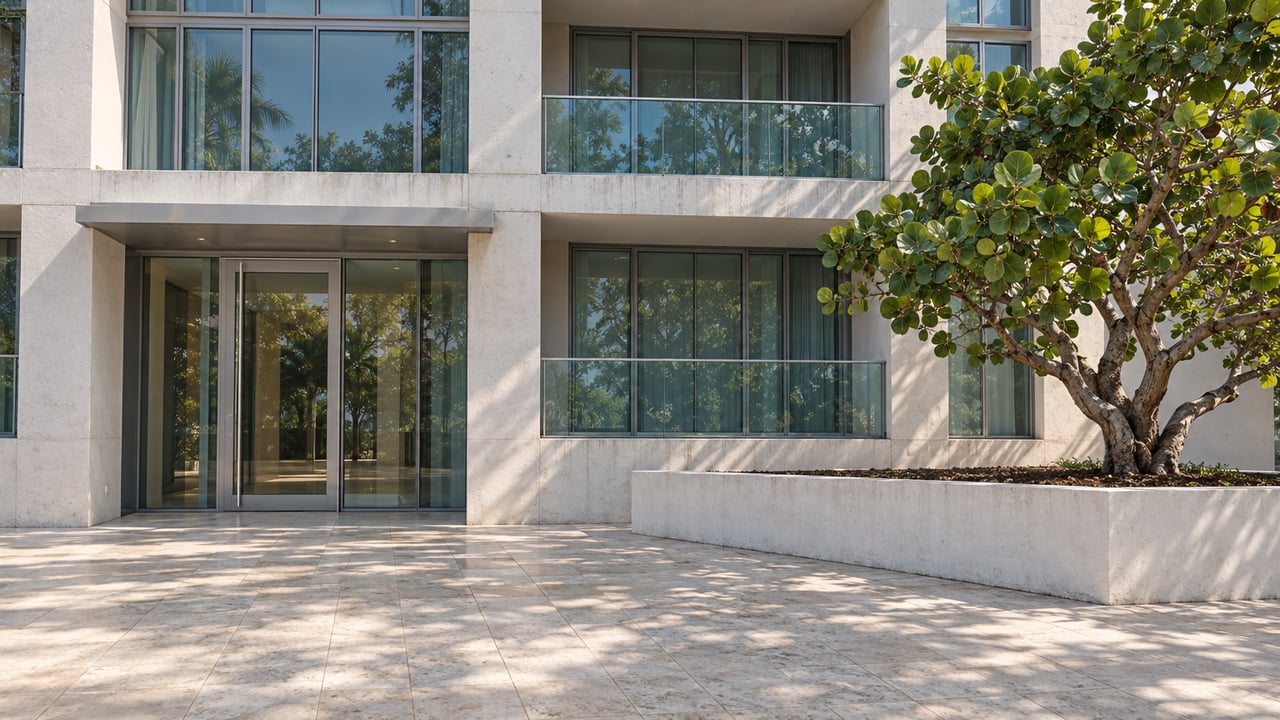
Another reason Fort Lauderdale feels different is the built form. Its Central Beach zoning is clearly oriented toward a high-rise beachfront environment, with some districts allowing structures up to 200 feet and, under certain approvals, up to 250 feet. In some A1A frontage areas, the code also requires active ground-floor uses, which supports a more mixed urban beach pattern.
That matters because the physical form of a market shapes your choices. Fort Lauderdale tends to offer more tower-style ocean-view inventory than nearby beach cities. If your ideal condo includes a taller building profile, broader amenity packages, and a more urban beachfront setting, Fort Lauderdale often leads the list.
For some buyers, that is exactly the point. You may be looking for elevated views, concierge-style amenities, and easy access to marinas, dining, and downtown activity. In that case, Fort Lauderdale’s premium may feel justified by the range of options and the depth of the waterfront lifestyle.
How Pompano Beach Compares
Pompano Beach presents a different value story. The city highlights its three-mile shoreline, 1,000-foot fishing pier, and redeveloped beachside fishing village. The beach is open 365 days a year, and the city also points to Water Taxi access as part of the beach experience.
From a planning standpoint, Pompano is still evolving. Its East Transit Oriented Corridor is designed to support mixed-use development with commercial uses on the first floor and residential above, while its marine-business zoning allows marinas, docking, marine sales, restaurants, and yacht clubs. That creates a market with real beach and boating appeal, but one that is still actively reshaping parts of its built environment.
For buyers, that often translates into a lower entry price than Fort Lauderdale with good access to shoreline living and boat-friendly infrastructure. If you are comfortable buying in a city that is still in redevelopment mode rather than a fully mature luxury strip, Pompano Beach may offer compelling value.
There is also a practical planning point to keep in mind. Pompano Beach states that Category 1 and 2 evacuation zones are east of the Intracoastal Waterway, and Category 3 or higher evacuation zones extend east of US 1. That does not make one property better than another, but it is an important part of your decision-making when comparing coastal locations.
How Hollywood Beach Compares
Hollywood offers a beach experience shaped more by its promenade lifestyle. The city says it has seven miles of beaches and the Hollywood Beach Broadwalk, which stretches about 2 to 2.5 miles along the Atlantic. That Broadwalk is one of Hollywood’s defining features, with year-round pedestrian and bicycle activity plus a strong lineup of restaurants and beachfront activity.
Hollywood also supports boating access through the city-operated Hollywood Marina at 700 Polk Street on the Intracoastal Waterway. The marina includes boat slips, a boat ramp, fuel service, and live-aboard, transient, and seasonal options. So while Hollywood may feel more promenade-driven than Fort Lauderdale, it still offers meaningful marine connectivity.
Its building pattern is more varied by subdistrict. Planning materials describe North Beach as roughly 2 to 4 stories, Central Beach as about 10 to 15 stories, and South Beach as an area with an existing pattern up to about 25 stories. That means Hollywood can appeal to buyers who want a broader mix of low-rise, mid-rise, and high-rise choices rather than a more consistently tower-oriented beachfront.
Hollywood also places visible focus on tidal flooding and sea-level-rise response. The city has updated its seawall ordinance to establish tidal flood protection regulations, and it notes that its shorelines, waterways, flat topography, and shallow water table make it vulnerable to sea-level rise and tidal flooding. For condo buyers, that makes building condition, maintenance planning, and site resilience especially important points to review.
Which Beach Market Fits You Best?
If your goal is the most premium, marine-centric lifestyle, Fort Lauderdale usually stands out. It combines higher-priced condo inventory with a dense marina network, extensive waterways, beachfront towers, and a more urban waterfront setting. That combination is hard to match if boating access and city energy both matter to you.
If you want ocean views with a lower entry point, Pompano Beach may be the better fit. You still get strong beach access and a boat-friendly identity, but often without the same luxury-tower premium that tends to define Fort Lauderdale.
If walkability along a beachfront promenade matters most, Hollywood deserves a close look. Its Broadwalk-centered lifestyle, marina access, and more segmented building profile can be a strong match if you want a slightly different pace and a wider range of building scales.
A Smart Condo Comparison Checklist
No matter which city you prefer, your search should go beyond views and finishes. Florida condo ownership now requires more careful due diligence, especially in older coastal buildings. For residential condominium associations, a structural integrity reserve study must be completed every 10 years for buildings that are three habitable stories or higher, and a milestone inspection is required once a building reaches 30 years of age and every 10 years after that.
Those two requirements are separate, and they can directly affect your costs and comfort level as an owner. Before you move forward on any ocean-view condo, make sure you review the building’s inspection status, reserve funding, recent or pending assessments, insurance posture, and any repair plans under discussion.
A beautiful view is only part of the value equation. The building itself, the association’s financial health, and the surrounding coastal setting all matter just as much. When you compare Fort Lauderdale to Hollywood or Pompano Beach, the smartest move is to weigh lifestyle, price, and building due diligence together.
If you want help comparing Fort Lauderdale ocean-view condos with nearby beach options in Broward County, Team Van Zyl brings local waterfront knowledge, marine credibility, and practical guidance to help you narrow the right fit.
FAQs
What makes Fort Lauderdale ocean-view condos different from Hollywood and Pompano Beach?
- Fort Lauderdale generally offers a more premium, high-rise, marine-centric lifestyle, while Hollywood is more promenade-driven and Pompano Beach is often the lower-entry-price option with ongoing redevelopment.
What are the recent condo prices in Fort Lauderdale, Hollywood, and Pompano Beach?
- In Q1 2026, the median sale price for citywide condos and townhouses was $485,000 in Fort Lauderdale, $310,000 in Hollywood, and $295,000 in Pompano Beach.
What kind of building styles can you expect in Hollywood Beach condos?
- Hollywood Beach includes a mix of lower-rise and higher-rise areas, with planning materials describing North Beach at roughly 2 to 4 stories, Central Beach around 10 to 15 stories, and South Beach up to about 25 stories.
What should you review before buying a Fort Lauderdale area condo?
- You should review the building’s milestone inspection status, structural integrity reserve study requirements, reserve funding, assessments, insurance posture, and repair planning before making a decision.
What evacuation factors should you consider in Pompano Beach condo searches?
- Pompano Beach states that Category 1 and 2 evacuation zones are east of the Intracoastal Waterway, while Category 3 or higher zones extend east of US 1, so coastal location is an important planning detail to review.