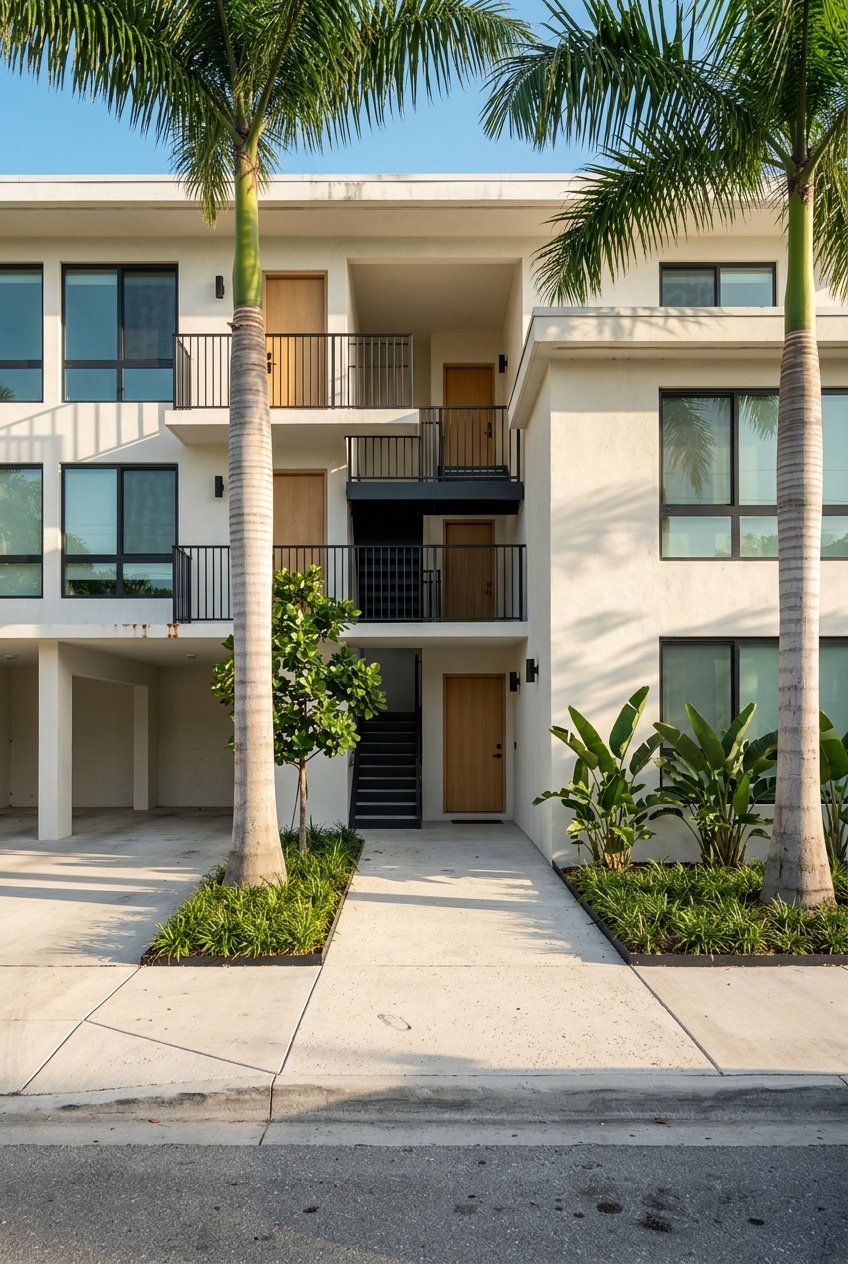
Looking at Fort Lauderdale through an investor lens, one thing stands out fast: this is not a small, one-note rental market. If you are considering a duplex, triplex, or fourplex here, you are stepping into a city with a growing population, a meaningful renter base, and several demand drivers that extend beyond one industry. That combination matters when you want an asset that can stay relevant through changing market cycles. Let’s dive in.
Fort Lauderdale Has Real Rental Depth
Fort Lauderdale reached an estimated population of 190,641 in 2024, according to the U.S. Census Bureau. Broward County reached 2,037,472 residents over the same period, with both the city and county posting growth since 2020.
For small multifamily investors, population growth is only part of the story. Fort Lauderdale is also compact, with just 34.59 square miles of land and a population density of 5,284.1 people per square mile. In practical terms, that means demand is concentrated in a relatively tight urban footprint rather than spread thin across a large area.
The city also has a renter-friendly housing mix. Fort Lauderdale’s owner-occupied housing rate was 54.1%, which implies about 45.9% renter-occupied housing. That is a notable renter share, especially compared with Broward County’s higher owner-occupied rate of 63.6%.
If you are evaluating a small multifamily property, this matters because renter demand is already part of the city’s foundation. You are not relying on a future shift in behavior. You are buying into a market where renting is already a major part of how people live.
A Diverse Economy Supports Year-Round Demand
Some coastal markets rise and fall with one sector. Fort Lauderdale is not built that way.
Broward County reported 780,632 total jobs and 68,191 employer establishments in 2023, with employment up 4.2% year over year. The county’s economic development strategy spans multiple sectors, including marine industries, aviation and aerospace, global business services, life sciences, international trade and logistics, and higher education.
The City of Fort Lauderdale also describes its economy as driven by marine, tourism, technology, finance, manufacturing, aerospace, and creative industries. Census business data further supports that broad base, with substantial activity in health care and social assistance, transportation and warehousing, accommodation and food services, and retail.
That kind of diversification can support rental housing in a more durable way. Instead of depending on one employer type or one seasonal trend, the city benefits from a mix of professional jobs, service jobs, logistics-related work, and business activity that helps sustain leasing demand across the year.
Airport, Port, and Visitor Activity Matter
Fort Lauderdale’s larger economic infrastructure adds another layer to the rental story.
Broward County’s annual report describes the local economy as anchored by the airport, seaport, and tourism. Fort Lauderdale-Hollywood International Airport handled 35.7 million passengers in fiscal year 2024, which reflects major movement through the area and supports a wide range of jobs tied to travel, operations, hospitality, and business services.
Port Everglades is another major force. Its fiscal year 2024 economic impact report states that the port generated nearly $28.1 billion in annual business activity, supported 12,272 direct local jobs, and supported 204,385 jobs statewide. Port Everglades also reported more than 4.0 million cruise passengers in fiscal year 2024.
On top of that, the City of Fort Lauderdale says it welcomes more than 19.4 million visitors who spend over $5.5 billion annually. For small multifamily investors, these figures help explain why the renter pool can be broader than just long-term local residents.
The Marine Economy Is a Unique Advantage
Fort Lauderdale’s marine identity is one of the clearest reasons small multifamily investors keep watching this market.
The city reports 165 miles of waterways within Fort Lauderdale. Greater Fort Lauderdale is described as having more than 300 miles of navigable waterways and more than 50,000 registered yachts. This is not just branding. It reflects a real operating ecosystem tied to marinas, shipyards, marine services, brokerage, hospitality, and support businesses.
The Fort Lauderdale International Boat Show adds to that profile. In 2024, the event drew more than 100,000 attendees, over 1,200 exhibitors, participation from 52 countries, and more than 1,300 boats, with a statewide economic impact of $1.778 billion.
Why does this matter for a duplex or fourplex? Because the marine economy can widen the renter base. It creates recurring housing demand tied to marine-industry workers, support staff, business travel, and seasonal activity connected to Fort Lauderdale’s boating infrastructure.
For investors who understand marina-adjacent locations or crew-accommodation potential, this can be especially relevant. Team van Zyl’s marine background gives clients an added layer of perspective here, particularly when an asset’s value is influenced by water access, nearby shipyards, or yachting-related demand.
Small Multifamily Fits the City’s Growth Pattern
Demand is one side of the equation. Supply and planning matter too.
Fort Lauderdale’s planning documents emphasize a more compact development pattern. The city’s transit-oriented development guidelines are designed to support pedestrian-friendly station areas and direct growth into more urban forms. Its mixed-use corridor planning also aims to accommodate residential units along major corridors.
The city’s economic development materials say that more than 4,000 new multifamily units are slated for delivery in 2025. That is important context for investors.
It suggests that city planning is not pushing growth away from multifamily housing. Instead, Fort Lauderdale is actively channeling new residential development into denser, infill-oriented formats. For owners of duplexes, triplexes, and fourplexes, that can reinforce the long-term logic of owning rental housing in a market that is planning for compact growth.
Why Duplexes to Fourplexes Appeal to Smaller Investors
Large apartment buildings can be hard to access for many buyers. Small multifamily properties often offer a more approachable entry point.
In Fort Lauderdale, duplexes, triplexes, and fourplexes can appeal to investors who want:
- Multiple income streams from one property
- A way to spread vacancy risk across more than one unit
- Exposure to a city with an established renter base
- Opportunities tied to infill locations and corridor growth
- Assets that may fit long-term hold or 1031 exchange strategies
This property size also gives you flexibility. Depending on the asset and location, you may be evaluating stable income, value-add potential, or uses tied to marine and crew-oriented housing demand.
That is where local analysis becomes critical. Rent-roll quality, actual operating history, building condition, flood exposure, and neighborhood-level supply all matter far more than broad headlines.
It Is Not Just a Tourism Story
A common question from out-of-area investors is whether Fort Lauderdale is too dependent on tourism.
The data suggests a broader picture. Broward County’s target industries and public reports point to economic anchors in airport activity, seaport operations, marine industries, logistics, health care, finance, technology, and education. Tourism is important, but it is not the only reason people live and work here.
That distinction matters when you are underwriting a small multifamily asset. A market supported by several sectors may offer more resilience than one built around a single visitor cycle.
Flooding and Insurance Need a Place in Your Analysis
Every market has tradeoffs, and Fort Lauderdale is no exception.
The city notes that many residents live in or near Special Flood Hazard Areas and provides public guidance on flood insurance. Broward County’s resilience efforts are also focused on climate, heat, weather, and sea-level impacts.
For investors, this means flood risk and insurance costs should be part of the first conversation, not an afterthought. A property can look strong on paper, but if flood exposure, insurance premiums, or physical mitigation needs are not understood up front, your returns can look very different after closing.
This is one reason local guidance matters. In a coastal market like Fort Lauderdale, understanding the block, the building, and the asset’s operating reality is essential.
What This Means for Investors
Fort Lauderdale attracts small multifamily investors because it offers a rare mix of qualities in one market. You have a growing population, a sizable renter share, a compact urban footprint, a diversified employment base, and a marine economy that creates its own layer of housing demand.
That does not make every duplex or fourplex a strong deal. It does mean the market has a clear logic behind it.
If you are exploring small multifamily opportunities in Fort Lauderdale, the best approach is a disciplined one. Focus on verified income, location context, flood and insurance exposure, and how the property fits the city’s broader growth pattern.
If you want a practical read on a Fort Lauderdale duplex, triplex, fourplex, or marina-adjacent investment opportunity, connect with Team Van Zyl. Their local Broward expertise, investor-focused analysis, and real marine industry knowledge can help you evaluate opportunities with more clarity.
FAQs
Why does Fort Lauderdale appeal to small multifamily investors?
- Fort Lauderdale combines population growth, a roughly 45.9% renter-occupied housing base, a compact urban footprint, and multiple employment drivers that support rental demand.
Is Fort Lauderdale only attractive because of tourism?
- No. Public data shows a broader economy supported by marine industries, airport and seaport activity, logistics, health care, finance, technology, education, and hospitality.
Why does the marine industry matter for Fort Lauderdale rentals?
- The city’s waterways, yacht activity, marine businesses, and major boat show presence can broaden housing demand through marine-related jobs, support services, and seasonal business activity.
How does city planning support multifamily in Fort Lauderdale?
- Fort Lauderdale’s planning documents support compact growth, transit-oriented development, and residential units along major corridors, while the city also reports more than 4,000 new multifamily units slated for delivery in 2025.
What risk should Fort Lauderdale multifamily investors review carefully?
- Flooding and insurance are key considerations because many properties are in or near Special Flood Hazard Areas, and those costs can materially affect investment performance.