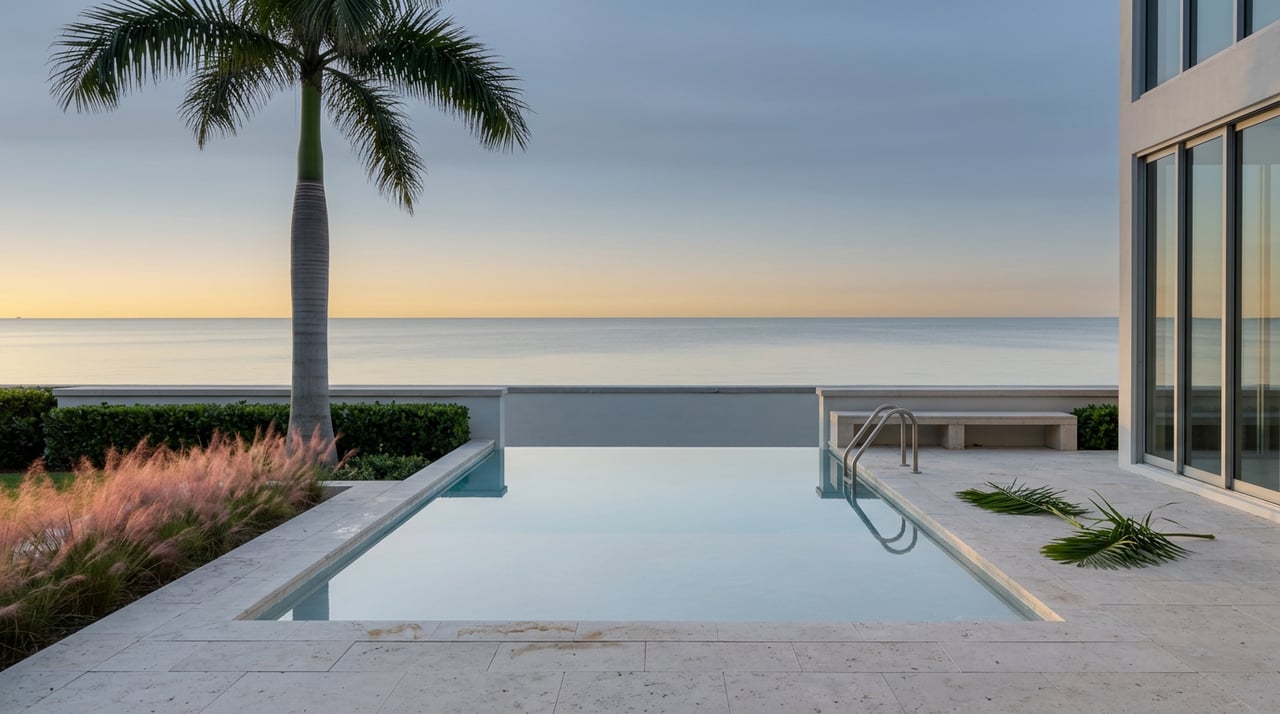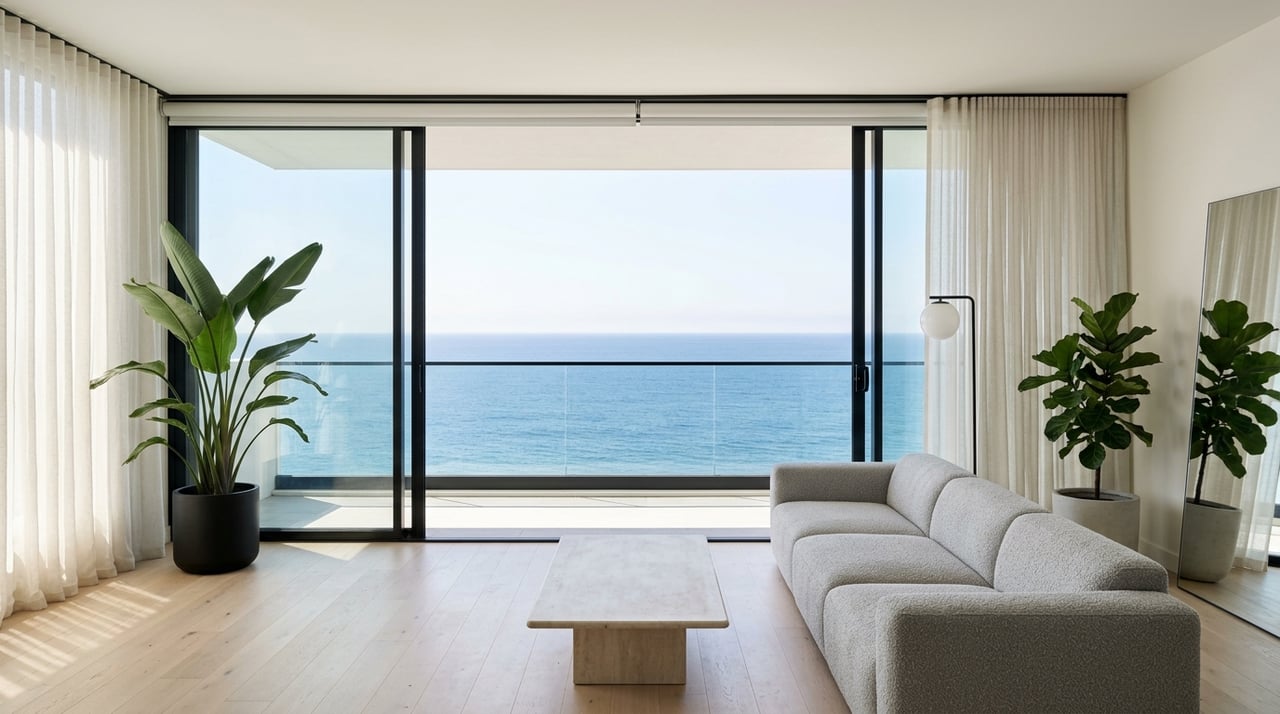
Are your ocean views getting lost behind bulky furniture, harsh glare, or finishes that do not hold up to South Florida living? If you own or are shopping for a Fort Lauderdale waterfront home or condo, you want interiors that celebrate the water without creating new problems with heat, humidity, or maintenance. The right design choices can help you protect sightlines, improve comfort, and make your space feel brighter and more refined. Let’s dive in.
Keep the View Wall Open
In an ocean-view room, the glass should do the talking. That means your layout should support the view instead of competing with it.
Low-profile seating, slim tables, and open-leg furniture usually work better than oversized sectionals or tall case pieces. When you keep furniture heights lower, more of the ocean stays visible from multiple points in the room.
Storage also matters. Placing larger cabinets and closed storage on side walls helps preserve a clean sightline toward the water.
Place Tall Pieces Off to the Side
If you need a TV, shelving unit, or accent cabinet, try to position it on a side wall instead of directly in front of the windows. This keeps the glazing as the focal surface and helps natural light move deeper into the room.
A partial screen can also help define zones without fully blocking the view. The goal is privacy and function without visually cutting the room in half.
Choose Window Treatments That Protect the View
Fort Lauderdale sunlight can be beautiful, but it can also bring glare and heat gain at the wrong times of day. Your window treatments should give you control while staying as visually light as possible.
A layered approach often works best in view-focused rooms. A light filtering layer can soften daytime glare, while a second layer can add privacy in the evening.
Use Light Filters for Daytime
Sheer shades, light blinds, or other soft daytime filters can reduce glare without making the room feel closed off. This helps you keep the ocean in view while taking the edge off intense sun.
Automated shades can be especially useful when conditions change quickly. You can keep them open most of the day and adjust them fast when direct sun becomes uncomfortable.
Avoid Heavy Fixed Coverings
On facades with strong direct sun, especially east- and west-facing glass, fixed heavy coverings can make daylight feel uneven and shut down the room. More flexible solutions, such as adjustable interior shades or exterior shading systems, tend to offer better control.
If you are replacing glazing or adding exterior protection, Broward County homes must follow code-compliant and product-approved standards because this area is in Florida’s High-Velocity Hurricane Zone.
Balance Light, Glare, and Heat
A bright room feels great until glare starts bouncing off every surface. In oceanfront interiors, maximizing light is important, but managing it is just as important.
Light-colored walls and matte finishes help reflect daylight through the space with less eye strain. They can make a room feel open and airy without the sharp contrast that often comes with darker or glossier finishes.
Be Careful With Reflective Surfaces
Mirrors, polished metals, and very glossy finishes can increase glare when placed near large glass walls. You do not need to avoid them completely, but using them selectively usually leads to a more comfortable result.
A better approach is to mix in soft luster rather than full shine. Think subtle texture, muted stone, pale woods, and low-glare finishes that support the view instead of overpowering it.
Use a Coastal Palette That Works Hard
In Fort Lauderdale, a coastal palette should do more than look good in listing photos. It should also support the way daylight behaves throughout the day.
Whites, soft neutrals, sand tones, and muted sea-glass colors tend to work well because they reflect light gently and keep the room feeling calm. These tones also let the blue water and sky become the strongest color statement in the space.
Skip Dark, Glossy Dominance
Deep colors and high-gloss surfaces can make shadows feel heavier and create more visual contrast. In a room with a major ocean exposure, that can distract from the natural focal point outside the glass.
If you love contrast, use it in measured ways. A darker accent chair, framed art, or a textured side table can ground the room without reducing its brightness.
Pick Materials for Humidity and Salt Air
Ocean-view design in Fort Lauderdale is not only about style. It is also about choosing materials that can handle moisture, salt exposure, and daily wear.
Florida health guidance recommends keeping indoor humidity below 60% to reduce mold risk, and extended periods above 70% relative humidity can lead to mold problems. That means finishes and furnishings should be easy to clean, quick to dry, and durable over time.
Favor Durable, Low-Maintenance Finishes
Corrosion- and decay-resistant materials are a smart fit for coastal interiors. Easy-care surfaces, moisture-resistant components, and practical upholstery choices can make everyday ownership simpler.
For fabrics, rugs, and soft goods, think about how quickly they can dry and how easily they can be cleaned or replaced if needed. Florida guidance notes that standing water for 24 hours can allow common molds to take hold, so resilience matters.
Think Beyond Looks
Some delicate finishes may look beautiful at first but require more upkeep in a salt-air setting. A better long-term choice is often a material that still looks refined but performs well under coastal conditions.
That approach can be especially helpful if you use the property seasonally, host guests often, or simply want a space that stays polished with less effort.
Upgrade Glazing With Performance in Mind
If you are renovating an older oceanfront property, glazing choices can have a big impact on comfort and maintenance. The best option is usually one that protects views while also helping with solar control.
Low-e coatings can help manage daylight transmittance and solar heat gain. They can also help reduce fading on fabrics and interior finishes.
Know the Trade-Off With Tint
Tinted windows can reduce solar heat gain, but they also reduce visible light. In a view-driven home, that trade-off may change the look and feel of the room more than you want.
For many owners, the better path is preserving clarity and brightness while using shades and low-glare finishes to fine-tune comfort.
Plan Lighting for After Sunset
A room that looks beautiful by day should still feel inviting at night. That takes more than one overhead fixture.
Layered lighting helps maintain balance after dark. Ambient lighting, task lamps, wall washing, and dimmable LEDs can keep the room bright and usable without harsh contrast.
Let the View Stay the Star
At night, lighting should support the architecture and interior layout, not overpower the windows. Softer, layered light usually feels more refined in waterfront spaces.
This also helps the room transition well from morning sun to evening entertaining. You get function without losing the calm, open feel that makes ocean-view living special.
Design for Comfort, Not Just Photos
A beautiful ocean-view interior should feel effortless to live in. In Fort Lauderdale, that means making choices that respect bright coastal light, humidity, and storm-related building demands.
The strongest rooms usually share a few traits: open sightlines, light but flexible window treatments, low-glare finishes, and materials that can stand up to coastal conditions. When those elements come together, your home can look elevated while staying comfortable and practical year-round.
If you are preparing to buy, renovate, or sell a waterfront property in Fort Lauderdale, thoughtful design can do more than improve your daily living. It can also help a home present more clearly, feel more valuable, and let the view carry the experience it was meant to deliver. For guidance on positioning and presenting waterfront property in Broward County, connect with Team Van Zyl.
FAQs
What furniture layout works best for Fort Lauderdale ocean-view living rooms?
- Low-back seating, slim tables, and placing tall storage on side walls usually helps preserve sightlines and keep the window wall visually open.
What window treatments help maximize ocean views in Fort Lauderdale?
- A layered system with a light daytime filter and a second privacy layer often gives you the best balance of glare control, privacy, and open views.
What colors work best in Fort Lauderdale ocean-view interiors?
- Light, matte colors such as whites, soft neutrals, sand tones, and muted sea-glass shades tend to reflect daylight gently and keep the room bright.
What materials hold up better in Fort Lauderdale coastal homes?
- Durable, easy-to-clean, moisture-resistant, and corrosion-resistant materials are typically better suited for salt air, humidity, and everyday coastal wear.
What should Fort Lauderdale homeowners know about replacing oceanfront windows?
- Because Broward County is in Florida’s High-Velocity Hurricane Zone, replacement glazing and exterior protection should be code-compliant and product-approved.