Buying an ocean-view condo in Fort Lauderdale can feel simple at first glance. You see blue water, a bright balcony, and a listing that promises a lifestyle upgrade. But if you want to evaluate a condo like a pro, you need to look past the marketing and focus on four things that matter most: how durable the view is, how protected the building is, how healthy the association is, and what the condo documents actually allow. Let’s dive in.
Start With the View Itself
An ocean view is often the reason you are shopping in the first place. The key is figuring out whether that view is truly protected or just attractive today.
In Fort Lauderdale, the city’s zoning and land use tools can help you see what may be built around a property. The city’s 3D zoning map, parcel zoning tools, and development project information can show nearby parcels, submitted development projects, and citywide development scenarios. That matters because your view premium should be based on what is likely to remain, not just what you see during a showing.
Ask if the view is durable
When you tour a unit, look beyond the balcony photo angle. Compare the condo’s stack, floor height, and orientation with surrounding parcels so you can judge whether nearby redevelopment could change the sightline.
A practical way to think about it is this: is the view direct, angled, or partial? Does it rely on vacant land or a low-rise building next door staying exactly as it is? If the answer is yes, the view may be less durable than the listing suggests.
Check the sightline from real living height
Views can look very different when you are seated at a dining table or sofa. A clear standing view does not always mean a clear everyday view.
During a showing, take a moment to look from seated height as well as standing height. This simple step can help you spot when a “sweeping ocean view” is really a narrower line of sight that only works from one corner of the room.
Review Coastal Protection Carefully
In Fort Lauderdale, weather protection is not a bonus feature. It is a core part of condo value and risk.
Broward County is in Florida’s High-Velocity Hurricane Zone. That means wind standards and opening-protection requirements are stricter than in most of the state, especially for windows and doors exposed to wind-borne debris.
Don’t stop at “impact glass”
Many buyers hear that a unit has impact windows and move on. A better question is whether the windows and doors were replaced under permit and whether the installed system has the proper product approvals and labels.
That distinction matters because not all upgrades carry the same compliance history. In a condo purchase review, permit and inspection records can help confirm whether the installation was done correctly and documented properly.
Look for salt-air wear
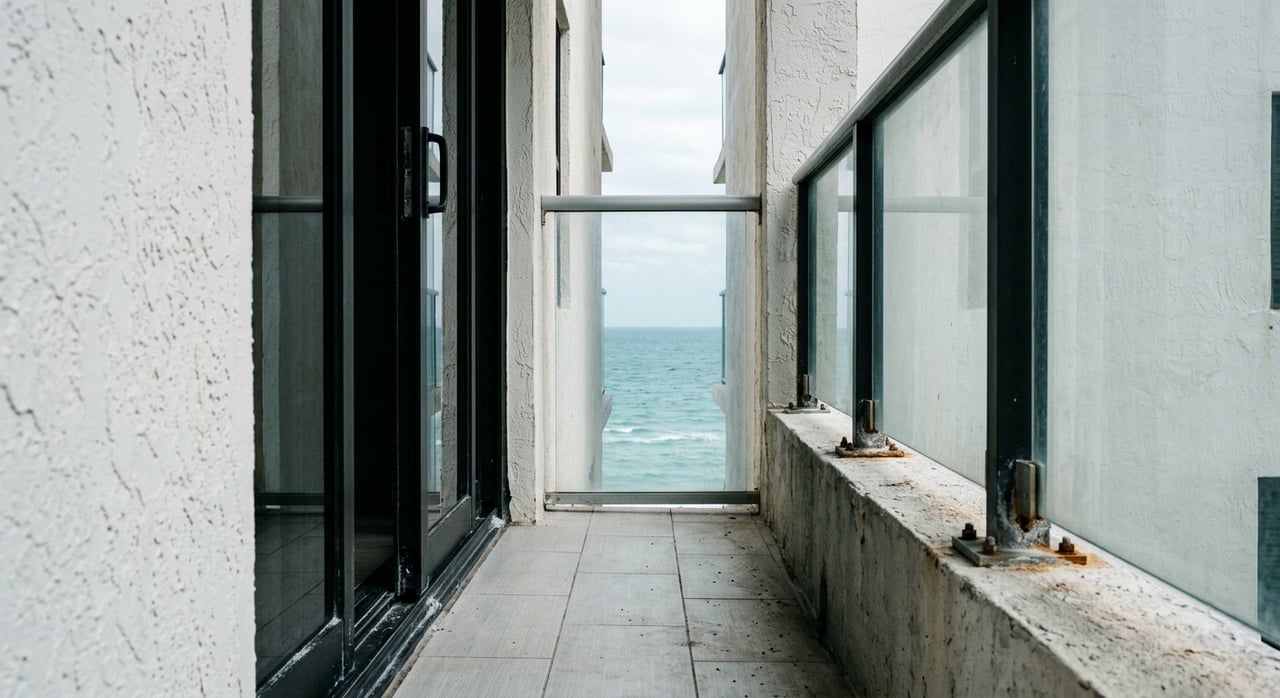
Ocean-view living comes with exposure to salt spray and onshore winds. Over time, that can accelerate corrosion, especially on metal components.
As you walk the property, pay close attention to balcony railings, door hardware, anchors, sealants, exterior metal, and any signs of rust or concrete spalling. These details can give you useful clues about deferred maintenance and the building’s exposure to coastal wear.
Evaluate the Association Like a Lender Would
A beautiful unit can still become a costly mistake if the association is underprepared for major repairs. In Fort Lauderdale ocean-view condos, this is one of the most important parts of due diligence.
Florida law now puts much more focus on building inspections and reserve planning for certain condominium buildings. If you are buying in a building that is three habitable stories or more, you should expect to review both inspection history and reserve planning in a serious, document-based way.
Understand milestone inspections
Florida requires milestone inspections for buildings that are three habitable stories or more, generally by age 30 and every 10 years after that. Local enforcement agencies can require the inspection at age 25 when local conditions justify it, including proximity to salt water.
For a coastal Fort Lauderdale building, that timing matters. A condo near the ocean may face a more demanding maintenance reality than a similar building farther inland.
Review the structural integrity reserve study
Residential condominium associations for buildings that are three habitable stories or higher must complete a structural integrity reserve study at least every 10 years. This study covers major building components like the roof, structure, fire protection, plumbing, electrical systems, waterproofing and exterior painting, windows and exterior doors, and other deferred-maintenance items above the statutory threshold.
This report gives you a clearer picture of what the building may need next. It also helps you understand whether the current budget lines up with the real condition of the property.
Low fees do not always mean low cost
A low monthly condo fee can look appealing. But it does not automatically mean the building is financially healthy.
For budgets adopted on or after December 31, 2024, unit-owner-controlled associations that must obtain a structural integrity reserve study may not vote to provide no or less reserves than required for the covered items. Even so, associations can still fund reserves and repairs through regular assessments, special assessments, lines of credit, or loans. In other words, low dues can sometimes hide larger costs ahead.
Watch for these red flags
As you review association records, keep an eye out for warning signs such as:
- stale financial statements
- thin reserves
- unexplained special assessments
- incomplete inspection files
- resistance to document requests
These issues do not always kill a deal, but they should slow you down and prompt deeper review.
Know Which Documents Matter Most
Florida condominium records can give you far more than a basic budget and rules sheet. For ocean-view condos, the records can help you verify both physical condition and financial readiness.
Association records may include plans, permits, warranties, insurance policies, inspection reports, structural integrity reserve studies, bids, and building permits. Buyers are also entitled to key resale documents such as the declaration, bylaws, rules, annual financial statement, annual budget, FAQ, and applicable inspection summaries.
Build your review in the right order
If you want an efficient process, follow a practical sequence:
- Check nearby zoning and permit activity for view risk.
- Confirm impact-rated windows and doors and review related permit history.
- Review milestone inspections, the structural integrity reserve study, budget, and insurance file.
- Read the declaration and rules for leasing limits and use restrictions.
This order keeps your attention on the biggest risks first. It also helps you stay grounded in public records and association documents instead of listing language alone.
Verify Rental Flexibility Before You Price the Upside
Some Fort Lauderdale buyers want an ocean-view condo for personal use. Others want flexibility to lease the unit part-time or hold it as an investment. In either case, you should verify rental rules before making assumptions about income potential.
In Florida, rental flexibility is governed primarily by the condominium documents. That means the declaration, bylaws, and rules matter more than the building’s location, style, or asking price.
Read the condo documents, not the marketing
If a seller or listing describes a building as investor friendly, treat that as a starting point. The governing documents are what control your actual rights and restrictions.
Before you buy, confirm the minimum lease term, any lease cap, the approval process, tenant screening requirements, and whether the unit is part of a master lease, rental pool, or association-run rental program. If the association acts as rental agent, official records can also include rental records.
A Pro-Level Condo Review Is About Risk, Not Just Beauty
Fort Lauderdale ocean-view condos can offer an incredible lifestyle, strong appeal for remote buyers, and lasting value when the fundamentals are solid. But the smartest buyers know that the best purchase is not always the one with the flashiest photo gallery. It is the one where the view is durable, the building shows strong coastal protection, the association’s records hold up, and the rules match your goals.
That is where a disciplined review makes a difference. When you evaluate the unit, the building, and the documents together, you put yourself in a much stronger position to buy with confidence.
If you want help reviewing Fort Lauderdale ocean-view condos with a sharper eye for waterfront risk, building health, and long-term value, connect with Team Van Zyl for practical guidance tailored to your goals.
FAQs
How can you tell if a Fort Lauderdale ocean-view condo has a protected view?
- Check the city’s zoning and development tools, then compare the unit’s floor height, orientation, and surrounding parcels to see whether nearby redevelopment could alter the sightline.
What should you inspect in a Fort Lauderdale condo besides the ocean view?
- Review the windows and doors for proper permit history and product approvals, and look for signs of salt-air wear like rust, failing sealants, worn hardware, and concrete spalling.
What association documents matter most for a Fort Lauderdale ocean-view condo purchase?
- Focus on the milestone inspection, structural integrity reserve study, annual budget, financial statements, insurance records, declaration, bylaws, rules, and applicable inspection summaries.
Why can a Fort Lauderdale condo with low monthly fees still be risky?
- Low fees do not always reflect strong finances because future repairs may still be funded through special assessments, loans, or other charges if reserves are not robust.
How do you confirm rental rules for a Fort Lauderdale condo?
- Read the declaration, bylaws, and rules to verify lease terms, approval requirements, lease caps, tenant screening standards, and any rental pool or association-run program details.